Specialty Chemicals

Water Treatment Chemicals Supplier from China

SUNCHEM supplies high-purity water treatment chemicals — scale & corrosion inhibitors, biocides, disinfectants, and coagulants — for industrial cooling towers, municipal water systems, swimming pools, and oil & gas applications.

Water Treatment System
20+
Years in Chemical Supply
45+
Export Markets Worldwide
15
Water Treatment Products
DOCS
COA / SDS / TDS Available

Global Water Treatment Chemicals Market

The global water treatment chemicals market exceeds USD 35 billion and is driven by tightening environmental regulations, industrial expansion, and growing demand for clean water infrastructure across Asia, the Middle East, and Latin America.

SUNCHEM's portfolio covers the full treatment cycle — from coagulation and pH adjustment to scale inhibition, biocidal disinfection, and membrane protection — enabling clients to optimize water quality and system longevity.

Cooling Towers Municipal Water Swimming Pools Oil & Gas Boiler Systems
Market Size (USD Billion) 28 31 34 37 40 2021 2022 2023 2024 2025E

Why Source Water Treatment Chemicals from SUNCHEM

Direct factory sourcing with full technical support and documentation for global compliance.

Full Documentation

Every product ships with COA, SDS, and TDS on request. We support regulatory compliance for EU REACH, TSCA, and GHS globally.

Purity & Quality Assurance

All water treatment chemicals are tested to industrial-grade purity standards. Batch QC reports and third-party lab certificates available upon request.

Flexible Order Sizes

From laboratory samples to multi-ton bulk shipments. We accommodate trial orders, regular purchase contracts, and emergency supply with fast turnaround.

Our Water Treatment Chemical Categories

Comprehensive coverage from scale inhibition to biocidal disinfection.

Scale & Corrosion Inhibitors

Phosphonate-based inhibitors (HEDP, ATMP, PBTCA) that prevent mineral scale deposition and metal corrosion in cooling and boiler systems.

Biocides & Disinfectants

Halogenated hydantoins (BCDMH, DCMEH, DCDMH), isocyanurate-based chlorine donors, and BIT for broad-spectrum microbial control in water systems and swimming pools.

Coagulants & Flocculants

Ferrous sulfate heptahydrate and related coagulants for municipal water clarification, sludge dewatering, and wastewater treatment to remove suspended solids.

Water Treatment Chemicals Catalogue

Explore our key products — request a quotation or technical datasheet for any item.

Ferrous Sulfate Heptahydrate
CAS: 7782-63-0
HEDP (1-Hydroxy Ethylidene-1,1-Diphosphonic Acid)
CAS: 2809-21-4
BCDMH (1-Bromo-3-Chloro-5,5-Dimethylhydantoin)
CAS: 16079-88-2
ATMP (Amino Trimethylene Phosphonic Acid)
CAS: 6419-19-8
Trichloroisocyanuric Acid (TCCA)
CAS: 87-90-1
Sodium Dichloroisocyanurate (SDIC)
CAS: 2893-78-9
PBTCA (2-Phosphonobutane-1,2,4-Tricarboxylic Acid)
CAS: 37971-36-1
BIT (1,2-Benzisothiazolin-3-one)
CAS: 2634-33-5

Request a Quote for Water Treatment Chemicals

Send us your specifications — our team responds within 24 hours with pricing, availability, and technical documentation.

Related Product Categories

Explore other specialty chemical categories from SUNCHEM.

Frequently Asked Questions

What water treatment chemicals does SUNCHEM supply?+

SUNCHEM supplies a full range of water treatment chemicals including phosphonate-based scale and corrosion inhibitors (HEDP, ATMP, PBTCA), halogenated biocides (BCDMH, DCMEH, DCDMH), chlorine-based disinfectants (TCCA, SDIC), microbiocides (BIT), and coagulants such as ferrous sulfate heptahydrate. We carry 15 products in this category with more on request.

What is HEDP used for in water treatment?+

HEDP (1-Hydroxy Ethylidene-1,1-Diphosphonic Acid) is a highly effective scale and corrosion inhibitor used in industrial cooling water systems, boilers, and heat exchangers. It chelates calcium and other metal ions to prevent mineral scale buildup and inhibits metal surface corrosion, extending equipment life and improving energy efficiency.

What chlorine-based biocides do you offer?+

We offer a range of chlorine-releasing biocides including Trichloroisocyanuric Acid (TCCA, 90% available chlorine), Sodium Dichloroisocyanurate (SDIC, 56–60% available chlorine), Sodium Dichloroisocyanurate Dihydrate (SDD), Cyanuric Acid (chlorine stabilizer), BCDMH, DCMEH, and DCDMH. These are used in swimming pools, cooling towers, and industrial water disinfection.

Can you provide COA, SDS, and TDS documents?+

Yes — all products have full technical documentation available including Certificate of Analysis (COA), Safety Data Sheet (SDS/MSDS), and Technical Data Sheet (TDS). Documents can be provided in English and Chinese. Please email info@sunchemgroup.com with your product name and required document format.

What is the minimum order quantity (MOQ)?+

Our minimum order quantities vary by product. Sample orders (500g–5kg) are available for qualification testing. Standard commercial orders typically start from 25kg to 1MT. For bulk quantities (drum, IBC, or flexi-bag), we offer competitive pricing with full export documentation. Contact us to discuss your specific volume requirements.

Do you ship internationally?+

Yes, SUNCHEM exports to 45+ countries across Europe, North America, Southeast Asia, the Middle East, and Africa. We handle all export logistics including hazardous goods documentation (UN numbers, IMDG compliance), certificates of origin, and customs clearance support. Both air freight and sea freight are available.

Pharma Intermediates

Food Additives Supplier from China

SUNCHEM supplies food-grade preservatives, flavour esters, antioxidants, stabilisers, and functional food ingredients from certified Chinese manufacturers — serving food processors, flavour houses, and ingredient distributors globally.

Food Additives & Ingredients
14+
Food Additive Products
FSSC
22000 Certified Sources
45+
Export Markets
DOCS
COA / SDS / FEMA Available

Food-Grade Ingredients from Certified Chinese Manufacturers

SUNCHEM's food additive range covers flavour esters (butyrates, hexanoates, propionates, isoamyl acetate), preservatives (propionic acid), antioxidants (DMTDP), stabilisers (xanthan gum, CMC), and functional ingredients for the global food and beverage industry.

Flavour Esters Preservatives Antioxidants Stabilisers Food-Grade
Portfolio by Function Flavours Preserv. Stabilisers Antioxid. 50% 21% 14% 14%

Why Source Food Additives from SUNCHEM

FSSC 22000 / Halal / Kosher

All food additives sourced from manufacturers holding FSSC 22000, Halal, and Kosher certifications. COA, SDS, allergen declarations, and FEMA GRAS status letters available on request for food-grade applications.

Full Regulatory Documentation

COA with GC purity, specific gravity, refractive index testing. REACH compliance, E-number reference data, and SDS per GHS/CLP. Supporting EU, US FDA, and Codex Alimentarius import filings for food ingredient buyers.

Sample to Bulk Supply

Sample quantities from 100ml/100g for product development. Commercial supply in 1kg, 5kg, 25kg drum, and IBC tank quantities. Flavour esters are available in food-grade packaging with tamper-evident seals and UN-compliant labelling.

Product Categories

Flavour Esters

Ethyl butyrate (CAS 105-54-4), Ethyl 2-methylbutyrate (CAS 7452-79-1), Ethyl heptanoate (CAS 106-30-9), Ethyl Hexanoate (CAS 123-66-0), Ethyl propionate (CAS 105-37-3), Isoamyl acetate (CAS 123-92-2) — all FEMA GRAS / EU-approved flavouring agents.

Preservatives & Antioxidants

Propionic acid (CAS 79-09-4) — E280 antimould agent for baked goods. Antioxidant DMTDP (CAS 16545-54-3) — thioester synergist for fat-based foods. Butyric acid (CAS 107-92-6) — flavour and preservation.

Stabilisers & Functional Ingredients

Xanthan gum — E415 thickener and stabiliser for sauces, dressings, and beverages. Carboxymethyl Cellulose (CAS 9004-32-4, E466) — water-binding agent. Ammonium Sulphate (CAS 7783-20-2) — yeast nutrient for bakery fermentation.

Product Catalogue

14 food additive products — request COA or quotation for any ingredient.

Ethyl butyrate
CAS: 105-54-4
Isoamyl acetate
CAS: 123-92-2
Propionic acid
CAS: 79-09-4
Xanthan gum
E415 Stabiliser
Carboxymethyl Cellulose
CAS: 9004-32-4
Ethyl Hexanoate
CAS: 123-66-0
Butyric Acid
CAS: 107-92-6
Antioxidant DMTDP
CAS: 16545-54-3

Request a Quote for Food Additives

Send your requirements — we respond within 24 hours with pricing and full food-grade documentation.

Related Categories

Frequently Asked Questions

Are your food additives suitable for EU and US market use?+

Yes — all food additives are supplied with COA meeting EU Food Additive Regulation (EC 1333/2008) and/or US FDA/FEMA specifications. Flavour esters are FEMA GRAS listed. We provide E-number references, purity specifications, and SDS in GHS/CLP format. For regulated markets, additional testing (heavy metals, microbiological) is available on request.

Do you supply Xanthan gum and CMC (E466)?+

Yes — food-grade Xanthan gum and Carboxymethyl Cellulose (CMC, E466, CAS 9004-32-4) are available in various viscosity grades. COA includes viscosity measurement, moisture content, ash content, and microbiological testing. Kosher and Halal certificates available from our source manufacturers.

What are the minimum order quantities?+

Samples from 100ml or 100g are available for product development. Commercial MOQ is 1kg for most food additives. Propionic acid and other liquid preservatives are available in 25kg drums or 200kg barrels. Flavour esters can be supplied in glass bottles, jerricans, or drums depending on quantity.

Pharma Intermediates

Amino Acids & Nutraceuticals Supplier

SUNCHEM supplies 25 amino acids and nutraceutical ingredients — including essential amino acids, glucosamine derivatives, creatine, L-Carnitine, Coenzyme Q10, and sweeteners — from GMP-certified Chinese manufacturers to the global supplements and pharma industry.

NH₂ R COOH CONH H Amino Acids & Nutraceuticals
25
Amino Acid & Nutraceutical Products
GMP
Certified Source Manufacturers
45+
Export Markets Worldwide
DOCS
COA / SDS / FSSC Available

Chinese-Sourced Amino Acids & Supplements Ingredients

SUNCHEM's amino acid and nutraceutical portfolio covers essential and non-essential amino acids (BCAA, EAA), joint health ingredients (glucosamine), energy and performance supplements (creatine, L-Carnitine, Taurine, AAKG, L-Citrulline), and sweeteners (Sucralose, Erythritol).

With 25 products sourced from FSSC 22000, Halal, Kosher, and GMP-certified Chinese manufacturers, SUNCHEM supplies supplement brands, contract manufacturers, and pharma ingredient importers globally.

Essential Amino Acids BCAAs Joint Health Sports Nutrition Sweeteners
Portfolio by Category Amino Acids Sports Joint CoQ10 Sweet. 40% 24% 20% 8% 8%

Why Source Amino Acids from SUNCHEM

Food-grade and pharmaceutical-grade ingredients with international certifications and full regulatory support.

FSSC 22000 & Halal/Kosher Certified

Amino acids and nutraceutical ingredients sourced from manufacturers holding FSSC 22000, Halal, Kosher, and GMP certifications. Suitable for sports nutrition brands, supplement contract manufacturers, and pharmaceutical applications globally.

Full Analytical Documentation

COA with HPLC purity, specific rotation, residue on ignition, and heavy metals testing per EP/USP/FCC monographs. SDS and TDS available. For nutraceutical brands we provide allergen statements, non-GMO declarations, and country-of-origin certificates.

Flexible Supply — Sample to Bulk

Sample quantities from 100g for formulation development. Commercial supply in 1kg, 5kg, 25kg drum, and pallet quantities. Fermentation-derived and synthetic L-form amino acids available. Fast lead times from Yangzhou warehouse stock.

Product Categories

Three key groups in our amino acid and nutraceutical portfolio.

AA

Essential & Non-Essential Amino Acids

L-Leucine, L-Isoleucine, L-Valine (BCAA), L-Phenylalanine, L-Methionine, L-Cysteine, L-Tyrosine, L-Glutamine, L-Alanine, L(+)-Arginine, Glycine, Beta-Alanine — food and pharmaceutical grades with full chiral purity data.

Sports & Performance Nutrition

AAKG (Arginine Alpha-Ketoglutarate, CAS 5256-76-8), Creatine Monohydrate (CAS 6020-87-7), L-Carnitine (CAS 541-15-1), L-Citrulline (CAS 372-75-8), Taurine (CAS 107-35-7), Betaine (CAS 107-43-7) — all with sports-grade documentation.

Joint Health & Sweeteners

Glucosamine HCL (CAS 66-84-2), Glucosamine Sulfate Potassium/Sodium, Coenzyme Q10 (CAS 303-98-0), Inositol, Erythritol (CAS 149-32-6), Sucralose (CAS 56038-13-2) — certified-grade with non-GMO and allergen documentation available.

Product Catalogue

25 amino acid and nutraceutical ingredients — request quotation or COA for any product.

L-Leucine
CAS: 61-90-5
L-Carnitine
CAS: 541-15-1
Creatine Monohydrate
CAS: 6020-87-7
Coenzyme Q10
CAS: 303-98-0
Taurine
CAS: 107-35-7
Glucosamine HCL
CAS: 66-84-2
L(+)-Arginine
CAS: 74-79-3
Sucralose
CAS: 56038-13-2

Request a Quote for Amino Acids & Nutraceuticals

Send your requirements — we respond within 24 hours with pricing, availability, and full documentation.

Related Product Categories

Frequently Asked Questions

Are your amino acids food-grade or pharmaceutical-grade?+

We supply both food-grade (FCC/EP) and pharmaceutical-grade amino acids. Food-grade products meet FCC (Food Chemicals Codex) specifications and are suitable for dietary supplement and food fortification use. Pharmaceutical grade meets EP/USP monograph specifications with additional testing for endotoxins and microbiological limits. Please specify your required grade when enquiring.

Do you supply BCAA (branched-chain amino acids)?+

Yes — we supply the three BCAAs individually: L-Leucine (CAS 61-90-5), L-Isoleucine (CAS 73-32-5), and L-Valine (CAS 72-18-4), all as fermentation-derived L-form with ≥98.5% HPLC purity. We can also supply in the standard 2:1:1 pre-weighed ratio as a blend on request.

What certifications are available for nutraceutical ingredients?+

Our nutraceutical ingredients are sourced from manufacturers holding FSSC 22000, ISO 22000, GMP, Halal, and Kosher certifications. For supplement brands we provide allergen statements, non-GMO declarations, country-of-origin certificates, and specific pharmacopoeia testing (USP, EP, BP) on request.

Is Creatine Monohydrate Creapure®-grade available?+

We supply standard Chinese-manufactured Creatine Monohydrate (CAS 6020-87-7) with ≥99.9% HPLC purity and low dicyandiamide/creatinine levels meeting Creapure® specifications. Creapure® is a branded product from AlzChem (Germany) — for the branded version, we recommend sourcing directly from AlzChem's authorised distributors. Contact us for pricing on our standard grade.

What are the minimum order quantities?+

Samples from 100g are available for formulation testing. Commercial MOQ is typically 1kg for most amino acids and 100g for specialty ingredients like Coenzyme Q10. Common products (L-Leucine, L-Glutamine, Taurine, Creatine) are available in 25kg drum quantities from warehouse stock with short lead times.

Pharma Intermediates

Pharmaceutical Intermediates Supplier

SUNCHEM supplies 60+ pharmaceutical and chemical intermediates — including synthesis building blocks, hair dye intermediates, ARB antihypertensives, and specialty organic chemicals — sourced from verified Chinese manufacturers with full documentation.

Pharmaceutical Intermediates
60+
Intermediates in Portfolio
20+
Years Export Experience
45+
Export Markets
DOCS
COA / SDS / TDS Available

Pharmaceutical Intermediates from China

SUNCHEM's pharmaceutical intermediates portfolio covers a broad range of organic building blocks, synthesis intermediates, ARB cardiovascular APIs, hair dye precursors, and specialty chemicals — all sourced from certified Chinese manufacturers.

With 60+ products across multiple chemical categories and export capability to regulated markets (EU, US, Japan, India, Southeast Asia), SUNCHEM provides COA, SDS, and compliance documentation for seamless import and regulatory filing.

Synthesis Building Blocks Hair Dye Intermediates ARB Antihypertensives Specialty Organics Industrial Chemicals
Portfolio by Category Building Blocks Hair Dye ARBs Specialty Other 33% 25% 21% 12% 9%

What We Offer in Pharmaceutical Intermediates

Broad chemical range, reliable sourcing, and complete regulatory documentation for pharmaceutical manufacturers and importers.

Synthesis Building Blocks

Core organic intermediates including Aniline, Resorcinol, Acetic Anhydride, Maleic Anhydride, various phenols, amines, and coupling agents for pharmaceutical synthesis. Full analytical characterisation on every batch.

Hair Dye & Personal Care Intermediates

Comprehensive range of hair colour intermediates: p-Phenylenediamine HCl/Sulfate, 2,5-Diamino Anisole Sulfate, HC Blue/Red/Violet colorants, Resorcinol, 5-Amino-o-Cresol, and oxidative dye precursors with REACH compliance data.

ARBs & Specialty APIs

Angiotensin receptor blockers including Candesartan (CAS 139481-59-7), Olmesartan (CAS 144689-63-4), and other cardiovascular APIs. Plus ZnPT/Sodium Pyrithione, D-Panthenol, Gamma Oryzanol, and other specialty actives.

Chemical Categories in Our Portfolio

Three major groups within our pharmaceutical intermediates offering.

Organic Synthesis Intermediates

Aniline, Acetic Anhydride, Resorcinol, Maleic Anhydride, N-Methylpyrrolidone, Gamma-Butyrolactone, p-Cresol, m-Cresol, Phosphoric Acid, O-Anisidine, Dicyclopentadiene, carbodiimide coupling agents, boronic acids, and 20+ more synthesis-grade chemicals.

Hair Dye Intermediates

p-Phenylenediamine HCl & Sulfate, 2,5-Diamino Anisole Sulfate, 2,4-Diamino Phenetole Sulfate, 4,5-Diamino-1-(2-hydroxyethyl) Pyrazole Sulfate, 4-Nitro-o-Phenylenediamine, HC Blue 11, HC Red 1, HC Violet BS, 5-Amino-O-Cresol — all with full REACH/toxicology data.

Antimicrobials & Actives

Sodium Pyrithione (SPT, CAS 3811-73-2), Zinc Pyrithione (ZnPT, CAS 13463-41-7), D-Panthenol (provitamin B5, CAS 81-13-0), Gamma Oryzanol (CAS 11042-64-1), β-Alanine (CAS 107-95-9), and other functional actives for pharma and personal care applications.

Product Catalogue

60+ pharmaceutical intermediates — request quotation, COA, or SDS for any product.

Aniline
CAS: 62-53-3
Acetic Anhydride
CAS: 108-24-7
Resorcinol
CAS: 108-46-3
Candesartan
CAS: 139481-59-7
Olmesartan
CAS: 144689-63-4
D-Panthenol
CAS: 81-13-0
Sodium Pyrithione (SPT)
CAS: 3811-73-2
Gamma-Butyrolactone
CAS: 96-48-0

Request a Quote for Pharmaceutical Intermediates

Send us your requirements — we respond within 24 hours with pricing, availability, and regulatory documentation.

Related Product Categories

Frequently Asked Questions

What documentation is provided with pharmaceutical intermediates?+

Each product ships with a Certificate of Analysis (COA) covering HPLC purity, melting point (where applicable), and physical specification. SDS and TDS are available on request. For regulated-market imports, we provide REACH compliance statements, ICH Q3D elemental impurity data, and residual solvent testing per ICH Q3C.

Are your hair dye intermediates EU cosmetics-compliant?+

Our hair dye intermediates — including p-Phenylenediamine, Resorcinol, Aminoanisole derivatives, and HC colorants — are supplied with REACH registration data and impurity profiles. Compliance with EU Cosmetics Regulation (EC 1223/2009) is the responsibility of the formulator; we provide full analytical data to support their safety assessments.

What is the minimum order quantity?+

Standard MOQ is 1–25kg depending on the product. Common industrial intermediates (Aniline, Acetic Anhydride, Resorcinol) are available in drum quantities. Specialty or high-value intermediates can be supplied in smaller quantities from 100g. Sample quantities are available for new customers subject to NDA.

Do you supply Candesartan and Olmesartan (ARBs)?+

Yes — Candesartan (CAS 139481-59-7) and Olmesartan (CAS 144689-63-4) are available from GMP-certified Chinese manufacturers. These are API-grade materials supplied with full batch documentation. Contact info@sunchemgroup.com with your purity requirements and intended use for pricing and regulatory support.

Can you supply Sodium Pyrithione and Zinc Pyrithione?+

Yes — both Sodium Pyrithione (SPT, CAS 3811-73-2) and Zinc Pyrithione (ZnPT, CAS 13463-41-7) are available in cosmetic and industrial grades. ZnPT is widely used in anti-dandruff shampoos and antifouling coatings. We supply with full REACH documentation and particle size data. Minimum order from 1kg.

Pharma Intermediates

API Supplier from China

SUNCHEM supplies Active Pharmaceutical Ingredients (APIs) including antivirals, carbapenems, oncology agents, ARBs, and NSAIDs — serving pharmaceutical manufacturers, contract research organisations, and API importers worldwide.

Active Pharmaceutical Ingredients
20+
Years in Chemical Supply
45+
Export Markets Worldwide
31
API Products Available
DOCS
COA / DMF / SDS Available

Pharmaceutical APIs from Verified Chinese Manufacturers

SUNCHEM's API portfolio covers five therapeutic categories — antiviral & antiretroviral agents, carbapenem antibiotics, oncology APIs, ARB antihypertensives, and NSAIDs — sourced from GMP-certified Chinese manufacturers with full regulatory documentation.

With 31 API products and export capabilities to the EU, US, Japan, India, and Southeast Asia, SUNCHEM provides COA, SDS, and DMF reference support for importers navigating complex pharmaceutical supply chains.

Antivirals & Antiretrovirals Carbapenem Antibiotics Oncology Cardiovascular Anti-inflammatory
API Portfolio by Category Antiviral Carbapenem Oncology Cardio Other 29% 21% 16% 13% 21%

Why Source APIs from SUNCHEM

GMP-certified sources, complete regulatory documentation, and responsive technical support for pharmaceutical importers.

GMP-Certified Sources

APIs sourced from WHO-GMP, EU-GMP, and CNAS-certified Chinese manufacturers. Full batch documentation including COA, residual solvent testing, heavy metal limits, and microbiological testing available for regulated markets.

Regulatory Documentation

COA, SDS, DMF reference letters, and REACH/ICH Q3D compliance documentation. Supporting import filings for EU (EMA), US (FDA), Japan (PMDA), and other regulated markets through our export coordination team.

Flexible Quantities & Sampling

Sample quantities from 1g to 100g for analytical evaluation. Commercial orders from 100g to multi-kilogram scale. Specialised cold-chain and UN-compliant packaging for sensitive APIs. Fast response on pricing and availability.

API Therapeutic Categories

Five key therapy areas covered by our pharmaceutical API portfolio.

Antivirals & Antiretrovirals

Acyclovir, Lamivudine, Zidovudine, Abacavir, Emtricitabine, Didanosine, Atazanavir, Ritonavir/Lopinavir, Tenofovir/Adefovir — HIV, HBV, and herpes virus APIs from WHO-GMP certified sources.

Carbapenem Antibiotics

Meropenem Trihydrate, Imipenem, Doripenem, Biapenem, Ertapenem Sodium, Faropenem — broad-spectrum beta-lactam antibiotics for serious hospital-acquired infections. Injectable-grade purity available.

Oncology & Other APIs

Gemcitabine, Capecitabine, Taxol (Paclitaxel) for cancer treatment. Losartan, Irbesartan, Valsartan, Eporlosartan (ARBs) for hypertension. Clarithromycin (macrolide antibiotic). Etodolac, Flurbiprofen, Loxoprofen (NSAIDs).

API Catalogue

31 Active Pharmaceutical Ingredients — request quotation, COA, or DMF reference for any product.

Acyclovir
CAS: 59277-89-3
Lamivudine
CAS: 134678-17-4
Meropenem Trihydrate
CAS: 119478-56-7
Gemcitabine
CAS: 95058-81-4
Capecitabine
CAS: 154361-50-9
Taxol (Paclitaxel)
CAS: 33069-62-4
Clarithromycin
CAS: 81103-11-9
Losartan
CAS: 114798-26-4

Request a Quote for APIs

Send us your API requirements — we respond within 24 hours with pricing, availability, and full regulatory documentation.

Related Product Categories

Frequently Asked Questions

Are your APIs from GMP-certified manufacturers?+

Yes — SUNCHEM sources APIs exclusively from manufacturers holding WHO-GMP, EU-GMP, or equivalent national GMP certifications. We can provide manufacturer audit reports, GMP certificates, and site master files (SMF) upon request for regulatory submissions.

What antiretroviral APIs do you supply?+

Our antiretroviral portfolio includes NRTIs: Lamivudine (3TC), Zidovudine (AZT), Abacavir (ABC), Emtricitabine (FTC), Didanosine (ddI), Tenofovir/Adefovir; PIs: Atazanavir, Ritonavir/Lopinavir; and NNRTIs on request. All with current COA and ICH Q3D elemental impurity data.

Which carbapenem antibiotics are available?+

We supply six carbapenem APIs: Meropenem Trihydrate, Imipenem, Doripenem, Biapenem, Ertapenem Sodium, and Faropenem. Injectable-grade purity (≥98% HPLC) with residual solvent testing per ICH Q3C. Typical packing in amber glass vials or double-polyethylene bags under nitrogen.

What documentation is provided with each API?+

Standard documentation includes: Certificate of Analysis (COA) with HPLC, IR, and melting point data; SDS (Safety Data Sheet); and TDS. For regulated markets we can provide DMF reference letters, REACH compliance statements, CEP (Certificate of Suitability) references where available, and specific pharmacopoeia testing (EP, USP, JP) on request.

What are the minimum order quantities for APIs?+

Samples (for analytical evaluation) are available from 1g to 100g at nominal cost. Commercial MOQ varies by product: common APIs (Acyclovir, Clarithromycin) from 1kg; specialty/oncology APIs (Taxol, Gemcitabine) from 10g to 100g due to high unit cost. Contact us for specific product availability and pricing.

Can you supply Taxol (Paclitaxel) and other oncology APIs?+

Yes — Taxol (Paclitaxel, CAS 33069-62-4), Gemcitabine HCl (CAS 95058-81-4), and Capecitabine (CAS 154361-50-9) are available from certified manufacturers. These require special handling, cold-chain logistics, and enhanced documentation. Please contact info@sunchemgroup.com with your purity requirements and intended use.

Specialty Chemicals

Flame Retardants Supplier from China

SUNCHEM supplies halogenated, phosphorus-based, and mineral flame retardants — TBBPA, DOPO, APP, ATH, and more — for plastics, textiles, electronics, and construction material applications worldwide.

Fire Protection Chemistry
20+
Years in Chemical Supply
45+
Export Markets Worldwide
9+
Flame Retardant Products
DOCS
COA / SDS / TDS Available

Flame Retardants for Global Safety Standards

SUNCHEM's flame retardant portfolio covers three key chemistries: halogenated (brominated), phosphorus-based, and mineral/inorganic — each suited to specific polymer systems, processing conditions, and regulatory frameworks including UL-94, IEC 60332, EN 13501, and RoHS.

With products spanning electronics (PCBs, connectors), construction (insulation panels, cables), automotive, and textile applications, SUNCHEM provides reliable supply, consistent quality, and full export documentation for global markets.

Electronics & PCBs Construction Automotive Textiles Wire & Cable
FR Type Market Share FR Market Halogenated 38% Phosphorus 35% Mineral 27%

Why Source Flame Retardants from SUNCHEM

Three FR chemistries, consistent quality, and full regulatory documentation for global compliance.

Halogenated FR

TBBPA and Decabromodiphenyl Ethane (DBDPE) — high-efficiency brominated flame retardants for epoxy resins, ABS, HIPS, and PC/ABS blends. Excellent thermal stability and compatibility with engineering polymer systems.

Phosphorus-Based FR

BDP, RDP, APP, Melamine Cyanurate, and DOPO — halogen-free phosphorus and nitrogen flame retardants for PU foams, polyamides, polycarbonate, epoxy systems, and intumescent coatings. RoHS and REACH compliant options.

Mineral & Inorganic FR

Aluminum Hydroxide (ATH) and Magnesium Hydroxide — eco-friendly, halogen-free mineral flame retardants with smoke suppression properties for wire & cable, rubber, and thermoset applications requiring low smoke toxicity.

Flame Retardant Product Groups

Three core chemistry types serving diverse polymer and substrate applications.

Brominated FR

TBBPA (CAS 79-94-7) for reactive use in epoxy laminates (FR-4 PCBs). Decabromodiphenyl Ethane (DBDPE, CAS 84852-53-9) as an additive FR for ABS, HIPS, polypropylene. High efficiency, low loading requirements.

Phosphorus & Nitrogen FR

APP, BDP, RDP for halogen-free formulations. DOPO for reactive phosphorus in epoxy. Melamine Cyanurate for nylon (PA6/PA66). All RoHS-compliant, suitable for EU REACH-registered supply chains.

Mineral Flame Retardants

ATH (Aluminum Hydroxide, CAS 21645-51-2) and Magnesium Hydroxide (CAS 1309-42-8) — endothermic, smoke-suppressing, halogen-free. Ideal for wire & cable, EVA foils, rubber profiles, and construction composites.

Flame Retardants Catalogue

Featured products — request quotation or datasheet for any item.

TBBPA
CAS: 79-94-7
Decabromodiphenyl Ethane (DBDPE)
CAS: 84852-53-9
BDP
CAS: 5945-33-5
RDP
CAS: 57583-54-7
APP (Ammonium Polyphosphate)
CAS: 68333-79-9
Melamine Cyanurate
CAS: 37640-57-6
Aluminum Hydroxide (ATH)
CAS: 21645-51-2
Magnesium Hydroxide
CAS: 1309-42-8

Request a Quote for Flame Retardants

Send us your requirements — we respond within 24 hours with pricing, availability, and technical documentation.

Related Product Categories

Frequently Asked Questions

What is TBBPA and where is it used?+

TBBPA (Tetrabromobisphenol A, CAS 79-94-7) is the world's highest-volume brominated flame retardant. It is used reactively in epoxy resins for FR-4 printed circuit board laminates, and as an additive FR in ABS plastics. SUNCHEM supplies TBBPA with purity ≥99%, typical Br content 58.5%, in 25kg bags.

What halogen-free flame retardants do you offer?+

Our halogen-free (HFFR) range includes: BDP and RDP (phosphate esters for PC/ABS), APP (ammonium polyphosphate for intumescent coatings and PP), Melamine Cyanurate (for PA6/PA66), DOPO (reactive phosphorus for epoxy), Aluminum Hydroxide/ATH, and Magnesium Hydroxide. All are RoHS compliant and suitable for REACH-registered supply chains.

What is DOPO used for?+

DOPO (9,10-Dihydro-9-oxa-10-phosphaphenanthrene-10-oxide, CAS 35948-25-5) is a reactive, halogen-free phosphorus flame retardant used in epoxy resins for high-performance PCB laminates, encapsulants, and structural composites. It provides excellent thermal stability (char formation) and is a key building block for phosphorus-containing epoxy hardeners.

What is the difference between ATH and Magnesium Hydroxide?+

Both are endothermic mineral flame retardants with smoke suppression. ATH (Aluminum Hydroxide, CAS 21645-51-2) decomposes at 180–200°C — suitable for PVC, EVA, and thermosets processed at lower temperatures. Magnesium Hydroxide (CAS 1309-42-8) decomposes at 300–330°C — preferred for polypropylene, nylon, and thermoplastics processed at higher temperatures.

Do your flame retardants comply with RoHS and REACH?+

Yes — all our halogen-free flame retardants (phosphorus-based and mineral) are RoHS compliant. TBBPA and DBDPE are not restricted under current RoHS/REACH, but compliance statements and SVHC declarations are available on request. SUNCHEM can provide full regulatory documentation including REACH SDS, MSDS, and RoHS compliance letters.

What packaging and MOQ apply to flame retardants?+

Most products are packed in 25kg paper bags or fiber drums. Liquid products (BDP, RDP) in 200kg drums or IBC tanks. Samples (100g–1kg) available for evaluation. Minimum commercial order: 25–100kg depending on product. Contact info@sunchemgroup.com with your specific requirement for a tailored quotation.

Polymers & Materials

Rubber Additives Supplier from China

SUNCHEM supplies high-purity rubber additives — vulcanization accelerators, antioxidants, antidegradants, and processing aids — for tire manufacturing, industrial rubber goods, footwear, and automotive sealing applications.

N S SH VULCANIZATION Rubber Accelerator Chemistry
20+
Years in Chemical Supply
45+
Export Markets Worldwide
17
Rubber Additive Products
DOCS
COA / SDS / TDS Available

Global Rubber Additives Market

The global rubber additives market is valued at over USD 5 billion, driven by growing tire production in Asia, expanding automotive manufacturing, and increasing demand for high-performance elastomers in industrial and consumer applications.

SUNCHEM supplies the full spectrum of vulcanization chemistry — from thiazole and sulfenamide accelerators to antioxidant/antiozonant systems and processing stabilizers — enabling formulators to precisely control cure rate, scorch safety, and long-term aging performance.

Tire Manufacturing Industrial Hoses Automotive Seals Footwear Conveyor Belts
Market Size (USD Billion) 3.5 4.0 4.5 5.0 5.5 2021 2022 2023 2024 2025E

Why Source Rubber Additives from SUNCHEM

Direct factory pricing with batch-level QC and full technical documentation for global compliance.

Full Documentation

COA, SDS, and TDS available for all products. Supporting EU REACH, RoHS, and global rubber industry compliance requirements.

Purity-Controlled Supply

Accelerator purity levels verified by HPLC or GC analysis. Consistent batch quality critical for cure rate and scorch safety performance.

Flexible Order Sizes

Sample quantities from 500g for lab trials up to multi-ton bulk for production. Drum, bag, IBC packaging with export documentation.

Our Rubber Additive Categories

Complete portfolio covering vulcanization, stabilization, and processing performance.

Vulcanization Accelerators

Thiazoles (MBT, MBTS), sulfenamides (CBS, TBBS, NOBS), thiurams (TMTD, TETD, TMTM), dithiocarbamates (ZBC) and guanidines (DPG) covering fast, semi-fast, and slow cure systems.

Antioxidants & Antidegradants

Polymerized TMQ (RD) and SUNNOX®1135 provide long-term heat and flex-cracking protection for NR, SBR, and EPDM rubber compounds in outdoor and dynamic applications.

Processing Aids & Inhibitors

PVA as release agent and film-former, lecithin-based emulsifiers (SP-C, SP-W) for compound lubrication, and CTP (PVI) as prevulcanization inhibitor for safe processing at high temperatures.

Rubber Additives Catalogue

Explore our key products — request quotation or technical datasheet for any item.

2-Mercaptobenzothiazole (MBT)
CAS: 149-30-4
Dibenzothiazole Disulfide (MBTS)
CAS: 120-78-5
N-Cyclohexyl-2-Benzothiazole-Sulfenamide (CBS)
CAS: 95-33-0
N-Tertiarybutyl-2-Benzothiazole-Sulfenamide (TBBS)
CAS: 95-31-8
Tetramethyl-Thiuram-Disulfide (TMTD)
CAS: 137-26-8
Diphenyl Guanidine (DPG)
CAS: 102-06-7
Polymerized 2,2,4-Trimethyl-1,2-Dihydroquinoline (TMQ/RD)
CAS: 26780-96-1
N-(Cyclohexylthio)Phthalimide (CTP/PVI)
CAS: 17796-82-6

Request a Quote for Rubber Additives

Send us your compound requirements — our team responds within 24 hours with pricing, availability, and technical documentation.

Related Product Categories

Explore other specialty chemical categories from SUNCHEM.

Frequently Asked Questions

What rubber accelerators does SUNCHEM supply?+

SUNCHEM supplies a comprehensive range of rubber vulcanization accelerators including thiazole types (MBT, MBTS), sulfenamide types (CBS, TBBS, NOBS), thiuram types (TMTD, TETD, TMTM), dithiocarbamate types (ZBC), and guanidine types (DPG). We carry 17 rubber additive products in total.

What is the difference between MBT and MBTS?+

MBT (2-Mercaptobenzothiazole, CAS 149-30-4) is a primary accelerator with fast cure speed but limited scorch safety. MBTS (Dibenzothiazole Disulfide, CAS 120-78-5) is the disulfide form with improved scorch safety and better storage stability, commonly used in NR and SBR compounds as a primary or secondary accelerator.

What is CBS used for in rubber compounding?+

CBS (N-Cyclohexyl-2-Benzothiazole-Sulfenamide, CAS 95-33-0) is a delayed-action sulfenamide accelerator widely used in NR, SBR, and BR tire compounds. It provides excellent scorch safety with fast vulcanization and produces a flat cure plateau, making it the preferred accelerator for modern tire manufacturing.

What antidegradants do you offer for rubber?+

We supply TMQ (Polymerized 2,2,4-trimethyl-1,2-dihydroquinoline, CAS 26780-96-1) as a heat and aging antioxidant for NR and SBR, and SUNNOX®1135 (CAS 125643-61-0) as a high-performance antidegradant providing combined antioxidant and antiozonant protection for rubber articles used in dynamic outdoor environments.

Can you provide COA, SDS, and TDS documents?+

Yes — all products have full technical documentation available including Certificate of Analysis (COA), Safety Data Sheet (SDS/MSDS), and Technical Data Sheet (TDS). Documents are provided in English. Please email info@sunchemgroup.com with your product name and required document format.

What packaging and order sizes are available?+

Rubber accelerators are available in 25kg bags, 500kg big bags, and drums depending on the product form (powder, granule, or liquid). Sample quantities from 500g are available for trials. We provide full export documentation including fumigation certificates, packing lists, and B/L instructions for sea and air freight.

Polymers & Materials

Resin & Raw Materials Supplier from China

SUNCHEM supplies engineering resins, petroleum-modified resins, specialty monomers and polymer intermediates — serving coatings, adhesives, fiber manufacturing, and engineering plastics industries worldwide.

Polymer Chain Structure
20+
Years in Chemical Supply
45+
Export Markets Worldwide
11
Resin & Polymer Products
DOCS
COA / SDS / TDS Available

Resin & Raw Materials for Global Manufacturing

SUNCHEM's resin and raw materials portfolio covers engineering polymers (PA6, PA66, PVA), petroleum-modified resins (C5/C9), copolyesters, and specialty intermediates — serving formulators, compounders, and manufacturers across coatings, adhesives, fiber and film production.

With 11 products backed by complete technical documentation, origin certificates, and export support, SUNCHEM provides consistent quality from verified Chinese production facilities with fast response on samples and commercial orders.

Coatings & Adhesives Engineering Plastics Fiber & Textile Film & Packaging Chemical Intermediates
End-use Applications Coatings Plastics Fiber Adhesive Other 35% 28% 18% 12% 7%

Why Source Resins & Raw Materials from SUNCHEM

Engineering polymer grades, petroleum resins, and specialty intermediates from verified Chinese manufacturers.

Engineering Polymer Grades

PA6 and PA66 (engineering nylon) for fiber, film, injection molding, and compounding. PVA grades for adhesives, coatings, and film applications — with batch COA and viscosity/molecular weight certification.

Petroleum & Modified Resins

G-Modified Petroleum Resin (C5/C9) and N-Modified Petroleum Resin (C9) for hot-melt adhesives, coatings, and rubber compounding. Consistent softening point, color, and acid value with each shipment.

Full Export Documentation

COA, SDS, and TDS for every product. Supporting REACH, RoHS, and trade documentation (Form E / Form F / CO) for import into EU, South Korea, Japan, India, and Southeast Asia.

Our Resin & Raw Material Categories

Three core product groups for polymer and resin applications.

Engineering Resins

PA6, PA66 for nylon fiber and injection molding. COPOLYESTER PETG009 for transparent packaging and medical applications. POLYVINYL ALCOHOL (PVA) for films, adhesives, and fiber sizing.

Petroleum & Modified Resins

G-Modified Petroleum Resin (C5/C9) and N-Modified Petroleum Resin (C9) — hydrocarbon resins for hot-melt adhesives, paints, rubber reinforcement, and road marking applications.

Specialty Monomers & Intermediates

Methacrylic anhydride for methacrylate chemistry, 4,4'-Diaminodiphenylsulfone (DDS) for epoxy curing agents and polyimide synthesis, Methallyl alcohol for specialty polymer synthesis.

Resin & Raw Materials Catalogue

11 products — request quotation or datasheet for any item.

PA6 (Nylon 6)
CAS: 25038-54-4
PA66 (Nylon 66)
CAS: 32131-17-2
POLYVINYL ALCOHOL (PVA)
CAS: 9002-89-5
G-Modified Petroleum Resin (C5/C9)
CAS: 64742-16-1
N-Modified Petroleum Resin (C9)
CAS: 68131-77-1
COPOLYESTER PETG009
CAS: 26780-49-4
Methacrylic Anhydride
CAS: 760-93-0
4,4'-Diaminodiphenylsulfone (DDS)
CAS: 80-08-0

Request a Quote for Resins & Raw Materials

Send us your requirements — we respond within 24 hours with pricing, availability, and technical documentation.

Related Product Categories

Frequently Asked Questions

What PA grades does SUNCHEM supply?+

SUNCHEM supplies PA6 (Nylon 6, CAS 25038-54-4) and PA66 (Nylon 66, CAS 32131-17-2) in fiber, injection molding, and film grades. Available with viscosity number, relative viscosity, and end-group certification. Packaging: 25kg bags. Minimum order: 1 metric ton.

What is the difference between C5/C9 and C9 petroleum resin?+

G-Modified Petroleum Resin (C5/C9, CAS 64742-16-1) is a blend of C5 aliphatic and C9 aromatic fractions, giving lighter color and broader compatibility. N-Modified Petroleum Resin (C9, CAS 68131-77-1) is a pure aromatic resin with higher softening point and stronger adhesion. Both are used in hot-melt adhesives, pressure-sensitive adhesives, and rubber reinforcement.

What grades of POLYVINYL ALCOHOL (PVA) are available?+

SUNCHEM supplies PVA (CAS 9002-89-5) in partially hydrolyzed (87-89%) and fully hydrolyzed (98-99%) grades for different viscosity ranges. Applications include textile sizing, paper coating, adhesives (wood glue, water-based), film production, and emulsion polymerization. Molecular weight and degree of hydrolysis can be customized per application.

What is 4,4'-Diaminodiphenylsulfone (DDS) used for?+

4,4'-DDS (CAS 80-08-0) is an aromatic diamine used as a curing agent for epoxy resins in high-performance composites, printed circuit boards (PCB), and aerospace applications. It provides excellent thermal stability, chemical resistance, and mechanical properties. Also used in polyimide and polysulfone synthesis.

What is COPOLYESTER PETG009 suitable for?+

COPOLYESTER PETG009 (CAS 26780-49-4) is a transparent, tough, and amorphous copolyester suitable for thermoforming, injection molding, and film extrusion. Common applications include food packaging, medical device housings, display panels, and cosmetic containers — where high clarity, impact resistance, and chemical resistance are required.

What documentation is available for these products?+

All products come with COA (Certificate of Analysis), SDS (Safety Data Sheet), and TDS (Technical Data Sheet). For export, SUNCHEM can provide Certificate of Origin (Form E for ASEAN, Form F for China-Korea FTA), REACH compliance statements, and customs documentation for most major markets. Contact info@sunchemgroup.com for specific document requests.

Specialty Chemicals

Other Chemicals Supplier from China

SUNCHEM offers a broad portfolio of specialty chemicals spanning surfactants, silicones, antimicrobials, UV filters, cosmetic actives, quaternary ammonium compounds, and antioxidants — serving personal care, home care, industrial, and formulation industries worldwide.

Specialty Chemical Portfolio
20+
Years in Chemical Supply
45+
Export Markets Worldwide
82
Specialty Chemical Products
DOCS
COA / SDS / TDS Available

Diverse Specialty Chemicals for Global Industries

SUNCHEM's "Other Chemicals" portfolio bridges multiple industries — from personal care formulators sourcing surfactants and silicones, to industrial manufacturers requiring quaternary ammonium biocides and antioxidants.

With 82 products spanning cosmetic actives, emulsifiers, UV filters, antimicrobials, thickeners, and specialty intermediates, SUNCHEM provides a single-source solution backed by export documentation, quality certifications, and responsive technical support.

Personal Care Home Care Industrial Cleaning Cosmetic Formulation Water Treatment
Portfolio by Category 82 Products Surfactants 30% Antioxidants 20% Silicones 15%

Why Source Specialty Chemicals from SUNCHEM

Broad portfolio, reliable supply, and full technical support from a single China-based chemical supplier.

82-Product Portfolio

From surfactants to silicones, UV filters to antioxidants — one supplier for your specialty chemical needs across personal care, home care, and industrial formulations.

Full Technical Documentation

COA, SDS, and TDS for all products. Supporting EU REACH, COSMOS, ECOCERT, and global regulatory frameworks for personal care and industrial chemical imports.

Quality Assured Supply

Lab-tested batches with HPLC, GC, and wet chemistry verification. Consistent quality from vetted Chinese manufacturers with ISO-certified production facilities.

Our Specialty Chemical Categories

A diverse portfolio organized around key functional chemistry.

Surfactants & Amphoterics

SLES, SLS, Cocamidopropyl Betaine, APG series, alkyl betaines, amine oxides, and more — key actives for shampoos, body washes, detergents, and industrial cleaners.

Silicones & Polymers

Dimethicone, Cyclopentasiloxane, Amodimethicone, Carbomers, Hydroxyethyl Cellulose, and Polyquaternium grades for conditioning, thickening, and film-forming in cosmetic and industrial formulations.

Antimicrobials & UV Filters

Zinc Pyrithione, Copper Pyrithione, DDAC for biocidal protection; Benzophenone-1/-4, Ethylhexyl Triazone, Ethyl-Hexyl-Methoxycinnamate for broad-spectrum UV protection in sunscreen and cosmetic formulations.

Other Chemicals Catalogue

Featured specialty chemicals — request quotation or datasheet for any product.

Cocamidopropyl Betaine
CAS: 61789-40-0
Sodium Lauryl Ether Sulfate 70%
CAS: 68585-34-2
Zinc Pyrithione (ZnPT)
CAS: 13463-41-7
Dimethicone
CAS: 9006-65-9
Hyaluronic Acid
CAS: 9004-61-9
Carbomer 940
CAS: 9003-01-4
SUNNOX®BHT
CAS: 128-37-0
Didecyl Dimethyl Ammonium Chloride
CAS: 7173-51-5

Request a Quote for Specialty Chemicals

Send us your product requirements — we respond within 24 hours with pricing, availability, and full technical documentation.

Related Product Categories

Frequently Asked Questions

What categories are in the Other Chemicals portfolio?+

The portfolio spans surfactants and amphoterics (SLES, SLS, betaines, APG), silicones and polymers (Dimethicone, Carbomers, Polyquaterniums, Hydroxyethyl Cellulose), antimicrobials and biocides (Zinc Pyrithione, Copper Pyrithione, DDAC), UV filters (Benzophenones, Ethylhexyl Triazone, Octinoxate), cosmetic actives (Hyaluronic Acid, Collagen, Panthenol), and industrial antioxidants (SUNNOX series).

What is Zinc Pyrithione (ZnPT) used for?+

Zinc Pyrithione (CAS 13463-41-7) is an antimicrobial and antifungal active used in anti-dandruff shampoos, preservative systems for personal care products, antifouling marine coatings, and industrial biocide applications. SUNCHEM supplies ZnPT in powder and dispersion forms with full documentation for cosmetic and industrial use.

What surfactants do you offer for personal care?+

Our surfactant range includes Sodium Lauryl Ether Sulfate 70% (SLES), Sodium Lauryl Sulfate (SLS/K12), Cocamidopropyl Betaine, Cocamidopropyl Hydroxysultaine, Alkyl Polyglycosides (APG 0810, 0814, 1214), Dodecyl Dimethyl Betaine, Disodium Cocoyl Glutamate, and amino acid-based surfactants for mild formulations.

Can you supply Hyaluronic Acid and collagen products?+

Yes — SUNCHEM supplies Hyaluronic Acid (CAS 9004-61-9) in low, medium, and high molecular weight grades for cosmetic and nutraceutical use. We also supply Bovine, Porcine, and Fish Collagen with batch-specific certificates and traceability documentation for use in cosmetics, food supplements, and medical-grade applications.

Do you supply UV filter ingredients for sunscreens?+

Yes — our UV filter portfolio includes Ethyl-Hexyl-Methoxycinnamate (Octinoxate, CAS 5466-77-3), Butyl Methoxydibenzoylmethane (Avobenzone, CAS 70356-09-1), Benzophenone-1 (CAS 131-56-6), Benzophenone-4 (CAS 4065-45-6), Phenyl-Benzimidazole-Sulfonic-Acid (Ensulizole, CAS 27503-81-7), and Ethylhexyl Triazone (CAS 88122-99-0).

What packaging and minimum order quantities apply?+

Packaging varies by product: liquids typically in 200L drums or IBC (1000L); powders in 25kg bags or drums. Sample quantities from 100g to 1kg are available for lab evaluation. Minimum order quantities for commercial orders start from 25kg. Please email info@sunchemgroup.com with your specific product requirements for a tailored quotation.

Specialty Chemicals

Paint & Pigment Chemicals Supplier from China

SUNCHEM supplies dye intermediates, organic pigments, resorcinol derivatives, and specialty chemicals for paints, coatings, textile dyeing, hair care formulations, and industrial applications—with COA, SDS, and TDS documentation on request.

Paint & Pigment Chemicals
20+
Years in Chemical Supply
45+
Export Markets Worldwide
53
Paint & Pigment Products
DOCS
COA / SDS / TDS Available
SUNCHEM in the Market

Your Reliable Source for Paint & Pigment Chemicals

SUNCHEM has been supplying dye intermediates and pigment chemicals to manufacturers across 45+ countries for over two decades. Our range includes aminophenols, resorcinol derivatives, pyrazolone compounds, azo dye intermediates, and specialty colorants used in architectural paints, industrial coatings, textile dyes, and hair colour formulations.

We work directly with factories in China and maintain strict quality standards, offering full documentation—Certificate of Analysis (COA), Safety Data Sheets (SDS), and Technical Data Sheets (TDS)—for every product.

Paint & Pigment Chemicals
What We Deliver

Why Buyers Choose SUNCHEM

🎨

Full Documentation

COA, SDS, and TDS available for every product. Customs-ready documentation for all export markets.

🧪

Quality Assurance

Every batch tested against specification. We supply only from verified manufacturers with consistent quality records.

🚢

Global Export

Export coordination to 45+ markets. We handle packing, labelling, and shipping documentation for international customers.

Our Strengths

What Sets Us Apart

⚗️

Dye Intermediates

Aminophenols, phenylenediamines, pyrazolones, and resorcinol derivatives for dye synthesis and hair colour.

Browse →
🖌️

Organic Pigments & Dyes

Acid dyes, basic dyes, and specialty colorants for textiles, plastics, inks, and coatings.

Browse →
🏭

Industrial Chemicals

Agrochemical intermediates, flame retardants, and specialty chemicals for industrial and agricultural use.

Browse →
Product Highlights

Featured Paint & Pigment Products

See All 53 Products ↓

Paint & Pigment Chemicals – Full Product List

53 products in our paint & pigment catalogue. Request COA, SDS, or TDS for any item.

# Product Name CAS No. Origin Action
1 1-Phenyl-3-Methyl-5-Pyrazalone CAS: 89-25-8 China Enquire
2 1,3-Phenylenediamine Sulfate CAS: 541-70-8 China Enquire
3 2-Amino-3-Hydroxy Pyridine CAS: 16867-03-1 China Enquire
4 2-METHYL RESORCINOL CAS: 608-25-3 China Enquire
5 2-Methyl-5-Hydroxyethylaminophenol CAS: 55302-96-0 China Enquire
6 2,4-D 98%TC CAS: 94-75-7 China Enquire
7 2,4-Diamino Anisole Sulfate CAS: 39156-41-7 China Enquire
8 3-NITRO-4-AMINO PHENOL CAS: 610-81-1 China Enquire
9 4-Aminodiphenylamine Sulfate CAS: 4698-29-7 China Enquire
10 4-CHLORORESORCINOL CAS: 95-88-5 China Enquire
11 4-NITRO-O-PHENYLENE DIAMINE CAS: 99-56-9 China Enquire
12 4,5-DIAMINO-N-HYDROXYETHYL PYRAZOLE SULFATE CAS: 155601-30-2 China Enquire
13 5-Amino-6-Chloro-O-Cresol CAS: 84540-50-1 China Enquire
14 5-NITRO-O-CRESOL CAS: 5428-54-6 China Enquire
15 6-AMINO-M-CRESOL CAS: 2835-98-5 China Enquire
16 6-AMINO-O-CRESOL CAS: 17672-22-9 China Enquire
17 6-Chloro-2-Amino-4-Nitrophenol CAS: 6358-09-4 China Enquire
18 6-CHLORO-5-AMINO-O-CRESOL China Enquire
19 Acid Violet 43 CAS: 4430-18-6 China Enquire
20 BASIC BULE 26 CAS: 2580-56-5 China Enquire
21 BASIC RED 51V CAS: 12270-25-6 China Enquire
22 Benazolin 95%TC CAS: 3813-05-6 China Enquire
23 beta-cyfluthrin95%TC CAS: 68359-37-5 China Enquire
24 Bis(1-hydroxy-1H-pyridine-2-thionato-O,S)copper CAS: 14915-37-8 China Enquire
25 Dimehypo(Thiosultap-sodium) 29%TC CAS: 52207-48-4 China Enquire
26 Hair Colorants Intermediates CAS: 5307-14-2 China Enquire
27 HC BLUE 2 CAS: 33229-34-4 China Enquire
28 HC RED 3 CAS: 2871-01-4 China Enquire
29 HC RED B54 CAS: 65235-31-6 China Enquire
30 HC RED BN CAS: 92952-81-3 China Enquire
31 HC YELLOW 2 CAS: 4926-55-0 China Enquire
32 HC YELLOW 4 CAS: 59820-43-8 China Enquire
33 HC YELLOW 5 CAS: 56932-44-6 China Enquire
34 M-Aminophenol CAS: 591-27-5 China Enquire
35 M-Phenylene Diamine HCl CAS: 541-69-5 China Enquire
36 M-Phenylenediamine CAS: 108-45-2 China Enquire
37 Maleic anhydride CAS: 108-31-6 China Enquire
38 Methacrylic anhydride CAS: 760-93-0 China Enquire
39 Methyl Cyclopentadiene Dimmer (MCPD) CAS: 26472-00-4 China Enquire
40 N-Methylaniline CAS: 100-61-8 China Enquire
41 N,N-BIS-(2-HYDROXYETHYL)-P-PHENYLENE DIAMINE SULFATE CAS: 54381-16-7 China Enquire
42 Nereistoxin(Monomehypo) 95%TC China Enquire
43 O-Aminophenol CAS: 95-55-6 China Enquire
44 O-CHLORO-P-PHENYLENE DIAMINE SULFATE CAS: 61702-44-1 China Enquire
45 P-Aminophenol CAS: 123-30-8 China Enquire
46 P-PHENYLENE DIAMINEWHITE FLAKE/POWDER CAS: 106-50-3 China Enquire
47 Phenylphosphinic acid CAS: 1779-48-2 China Enquire
48 Pigment Red 3 CAS: 2425-85-6 China Enquire
49 Sarcosine 40% Solution CAS: 4316-73-8 China Enquire
50 Sodium chloroacetate China Enquire
51 Sodium Picramate CAS: 831-52-7 China Enquire
52 SUNNOX®1135 CAS: 125643-61-0 China Enquire
53 Triazophos 85%TC CAS: 24017-47-8 China Enquire

Ready to Source Paint & Pigment Chemicals?

Contact our team for pricing, availability, samples, and documentation.

Explore Related Chemical Categories

Common Questions

What types of paint and pigment chemicals does SUNCHEM supply?+
SUNCHEM supplies dye intermediates (aminophenols, phenylenediamines, resorcinol derivatives, pyrazolones), organic pigments (acid dyes, basic dyes, specialty colorants), and agrochemical intermediates. Our catalogue covers 53 products for the paint, coatings, textile dyeing, and hair colour industries.
Can you provide COA, SDS, and TDS for paint & pigment chemicals?+
Yes. We provide Certificate of Analysis (COA), Safety Data Sheets (SDS), and Technical Data Sheets (TDS) for all products on request. These documents are available in English and can be provided before or after order placement.
What is the minimum order quantity for paint & pigment chemicals?+
Minimum order quantities vary by product and typically start from 25 kg for specialty chemicals. Sample quantities are available for qualification testing. Contact us for specific product MOQs.
Which countries does SUNCHEM export paint & pigment chemicals to?+
We export to over 45 countries worldwide, including markets in Europe, Southeast Asia, South Asia, the Middle East, Africa, and the Americas. We handle export documentation, packing, and logistics coordination for international customers.
How long does delivery take for paint & pigment chemicals from China?+
Delivery typically takes 15–35 days depending on the destination and shipping method. Air freight is available for urgent orders. Lead time for production is typically 7–15 days for in-stock items.
Are the paint and pigment chemicals REACH or RoHS compliant?+
We work with manufacturers who comply with REACH regulations for the European market and other applicable standards. Compliance documentation can be provided on request. Please specify your regulatory requirements when enquiring.
Specialty Chemicals

Organic Solvents & Fine Chemicals Supplier from China

SUNCHEM supplies high-purity organic solvents and fine chemical intermediates — acetonitrile, DMAC, acetophenone, diethyl ether, naphthalene derivatives, and aromatic amine intermediates — for pharmaceutical, coatings, dye synthesis, and industrial applications.

Organic Chemistry Lab
20+
Years in Chemical Supply
45+
Export Markets Worldwide
18
Organic Solvent Products
DOCS
COA / SDS / TDS Available
Chemical Supply

SUNCHEM in the Organic Solvents Market

SUNCHEM sources and exports organic solvents and specialty fine chemicals from verified Chinese manufacturers. Our product portfolio covers polar aprotic solvents, aromatic ketones, naphthalene derivatives, and aminophenoxyethanol compounds widely used in dye synthesis, pharmaceutical APIs, and coating formulations.

We serve chemical distributors, pharmaceutical manufacturers, and coating formulators across Europe, Asia, and the Americas — providing reliable supply backed by full technical documentation and export coordination.

Capabilities

What we deliver

Full sourcing, documentation, and export support for organic solvents and fine chemical intermediates.

Full Documentation

COA, SDS/MSDS, and TDS available for all products. Export documents and compliance paperwork coordinated for your destination.

Quality Assurance

Strict QC testing at source for purity and specification compliance. Products verified against buyer requirements before shipment.

Global Export

Experienced export team handles shipping documentation, customs clearance support, and reliable delivery to 45+ countries worldwide.

Advantage

What sets us apart

We make what matters most for international B2B buyers of organic solvents and fine chemicals.

Polar Aprotic Solvents

Acetonitrile, N,N-Dimethylacetamide (DMAC), and 1,3-Dioxolane for pharmaceutical synthesis, battery electrolytes, and specialty chemical reactions.

Aromatic & Ketone Solvents

Acetophenone, benzene sulphonyl chloride, and diethyl ether for coatings, extraction, and industrial chemical processes.

Enquire now →

Specialty Intermediates

Naphthalene derivatives, aminophenoxyethanol compounds, and diaminotoluene for dye synthesis, hair color formulations, and fine chemical manufacturing.

Featured Products

Core Organic Solvent Products

Selected solvents and fine chemical intermediates available for export with full documentation.

1,2,3-Benzenetriol (PYROGALLOL)
CAS: 87-66-1
1,3-Dioxolane
CAS: 646-06-0
1,5-Dihydroxy Naphthalene
CAS: 83-56-7
2-Chloro-1,4-benzenediamine sulfate
CAS: 6219-71-2
2-Phenoxy Ethanol
CAS: 122-99-6
2,4-Diaminophenoxyethanol Dihydrochloride
CAS: 66422-95-5
2,4-Diaminophenoxyethanol Sulfate
CAS: 70643-20-8
2,5-Diamino Toluene Sulfate
CAS: 615-50-9

Ready to Source Organic Solvents from China?

Send us your product name, CAS number, required quantity, destination, and documentation needs. SUNCHEM responds within 24 hours.

Product Categories

Related categories

Common questions

Frequently asked questions about sourcing organic solvents and fine chemicals from SUNCHEM.

What organic solvents does SUNCHEM supply from China?+

SUNCHEM supplies 18 organic solvent and fine chemical products including acetonitrile, acetophenone, diethyl ether, N,N-dimethylacetamide (DMAC), 1,3-dioxolane, 2-phenoxy ethanol, pyrogallol, naphthalene derivatives, and a range of aromatic amine intermediates used in dye and pharmaceutical synthesis.

Can I get COA, SDS, and TDS documents?+

Yes. SUNCHEM provides complete technical documentation including Certificate of Analysis (COA), Safety Data Sheet (SDS), and Technical Data Sheet (TDS). Contact info@sunchemgroup.com to request documents for any specific product.

What is the minimum order quantity (MOQ)?+

MOQ varies by product and typically ranges from 1 kg for samples to 25 kg or more for commercial orders. Please contact our sales team with the specific product and quantity needed.

Which countries do you export to?+

SUNCHEM exports to over 45 countries including the United States, EU member states, India, Southeast Asia, the Middle East, and South America. We handle all export documentation and customs coordination.

How do I request a sample?+

Email info@sunchemgroup.com with the product name, CAS number, required quantity (typically 50-200 g), and your shipping address. We offer free or low-cost samples for qualified buyers.

Are your solvents suitable for pharmaceutical use?+

Several products meet pharmaceutical-grade specifications. DMAC and acetonitrile are widely used in API synthesis and purification. Please specify your grade requirements when enquiring so we can provide appropriate documentation and specifications.

November 22, 2021

The Development Trend of Intermediates Industry

Industry Perspective

This report mainly provides an in-depth analysis of the intermediates industry. As an important field of fine chemical industry, intermediates industry has huge development space. This report starts from the perspective of industry chain transfer and competitive advantage, and explores the future development trend of intermediates industry in China with reference to the development history of leading intermediates enterprises.

The global industrial division of labor is gradually clear, and China has outstanding advantages in developing fine chemicals. International industrial transfer continues, and for the chemical industry, the type of industrial transfer is upgraded to differentiated fine chemical products. Undertake the industrial transfer of the fine chemical industry, China's labor cost advantage over India and other countries still exists. The complete industrial chain layout as well as supporting facilities will be China's unique development advantage, which is difficult to surpass, so China's overall competitive advantage still exists.

China intermediates industry continues to develop and enters a new stage of development. As an important branch of fine chemical industry, intermediate industry continues to develop rapidly under the background of industrial transfer and superimposed on China's demand. China's environmental protection requirements are tightening, resources are tilted to high value-added industries, and with the rise of environmental protection costs, leading chemical companies will gain more competitive advantages. Therefore, the leading companies in the fine chemical industry will benefit centrally.

R&D is of great importance to the intermediate industry, and the current Chinese chemical industry generally attaches less importance to R&D. In the environment of rising technical requirements, efficient R&D-oriented enterprises with strong R&D strength will stand out.

The demand for pesticides and pharmaceutical intermediates is growing steadily and has room for growth. Pesticides and pharmaceutical intermediates are still In the growth period, the industry itself has strong room for growth. For the customized intermediates with strong profitability, the downstream patented drugs will face a large number of patent expiration in the next few years, and the generic drugs will get a significant increase in space. In the short term, intermediates manufacturers will still enjoy the explosive growth of demand, upgrade from CMO mode to CDMO mode, and enjoy the profitability improvement of product release. In the long term, with their technological advantages, they will extend downstream of the industry chain and carry out integrated layout, which will further enhance the profitability of enterprises.

Recommendations

In the context of the continuation of the trend of industrial transfer, the continued growth of downstream industries and the tightening of environmental protection in China, the industry has passed the rough and rapid development period and will pay more attention to the quality of development and enter a new stage of prosperity for the leaders. The leading pesticide and pharmaceutical intermediate companies with strong R&D strength and industrial chain extension layout, which can develop to CDMO mode through excellent R&D technology advantage, will occupy a dominant position in the market. We recommend choosing intermediates with perfect environmental protection system, strong R&D strength and industry chain extension opportunities Leading enterprises.

Research Logic

China's chemical industry has jumped to the first place in the world in terms of sales volume. Under the general trend of increasing the rate of fine chemicals, the intermediate industry, as an important field of fine chemicals, has huge development space. This paper mainly answers several key questions of intermediate industry in the development process from the perspective of industry chain transfer and competitive advantage.

·In the past ten years, international industrial transfer has driven the rapid development of China's pesticide and pharmaceutical intermediates industry, does the advantage of China to undertake industrial transfer still exist today?

·After the rapid development of intermediates in the past, what kind of development stage will the intermediates industry enter in the future?

·The downstream pesticide and pharmaceutical industries are facing the "patent cliff", what kind of impact does it have on the custom intermediate enterprises?

The advantages of developing fine chemical industry in China are outstanding: through the research and analysis of intermediate industry, we believe that the international industrial transfer is still going on, and for the chemical industry, the type of industrial transfer is upgrading to differentiated fine chemical products. Undertaking the industrial transfer of fine chemical industry, China's labor cost advantage over India and other countries still exists, and China's complete industrial chain layout and supporting facilities will be China's unique development advantage, which is difficult to surpass, so the overall competitive advantage still exists.

China intermediate industry will enter a new stage of development of leading prosperity in the future after experiencing the rapid development of rough and loose in the past. On the one hand, China's environmental protection requirements are tightening and resources are tilted to high value-added industries. With the increase of environmental protection costs, leading chemical companies will gain more competitive advantages. On the other hand, the current Chinese chemical industry generally attaches less importance to R&D. In the environment of rising technology requirements, efficient R&D-oriented companies with strong R&D strength will stand out.

Under the background of patent cliff, there are opportunities for CDMO mode and industry chain extension: pesticide and pharmaceutical intermediates are still in the growth period, and the industry itself has strong growth space. For the custom intermediates with strong profitability, their downstream patented drugs will face a large number of patent expiration in the next few years, and the generic drugs will get a significant increase in space. Intermediates manufacturers will still enjoy the explosive growth of demand in the short term. In the short term, intermediate manufacturers will still enjoy the explosive growth of demand, upgrade from CMO mode to CDMO mode, and enjoy the profitability improvement of product release. In the long term, with their technological advantages, they will extend downstream in the industry chain and carry out integrated layout, and their profitability will be further enhanced.

1. The global industrial division of labor is gradually clear, and China has outstanding advantages in developing fine chemicals

1.1 Global industrial division of labor is gradually clear, and China is gradually taking up industrial transfer

Global economy becomes integrated and international industrial transfer continues. With the deepening of global economic integration, four large-scale international industrial transfers have taken place, and now the outsourcing of R&D and production has become an important part of international industrial transfer. Among them, before 1980, it was manifested as a gradient transfer from the first country (region) to the second country (region). After 1980, the transfer of labor-, capital- and technology-intensive industries was carried out within multinational corporations, and the mode of transfer was extended from international trade and investment to production outsourcing and merger and reorganization, and the field of industrial transfer was extended to service industry. Along with the transfer of industries, a clear pattern of industrial division of labor has gradually formed globally. From the perspective of the global resource allocation process, the adjustment and upgrading of industrial structure reflect the comparative advantage that the country has in the global economy.

Since the 1980s, China has been gradually taking over industrial transfer. In terms of actual foreign investment utilized in China, the actual amount of foreign investment utilized in China was US$2.26 billion in 1983, and with the deepening of reform and opening up, a period of rapid growth of industrial transfer was initiated. From the 1980s to the present, there are two major trends of industrial transfer from other countries and regions around the world to China: first, the scale of industrial transfer is getting larger and larger, and the increasing amount of actual foreign investment utilized in China each year reflects to a certain extent the increasing scale of industrial transfer, and second, the industries transferred are constantly upgraded.

Figure 1: The scale of industrial transfer undertaken by China is increasing
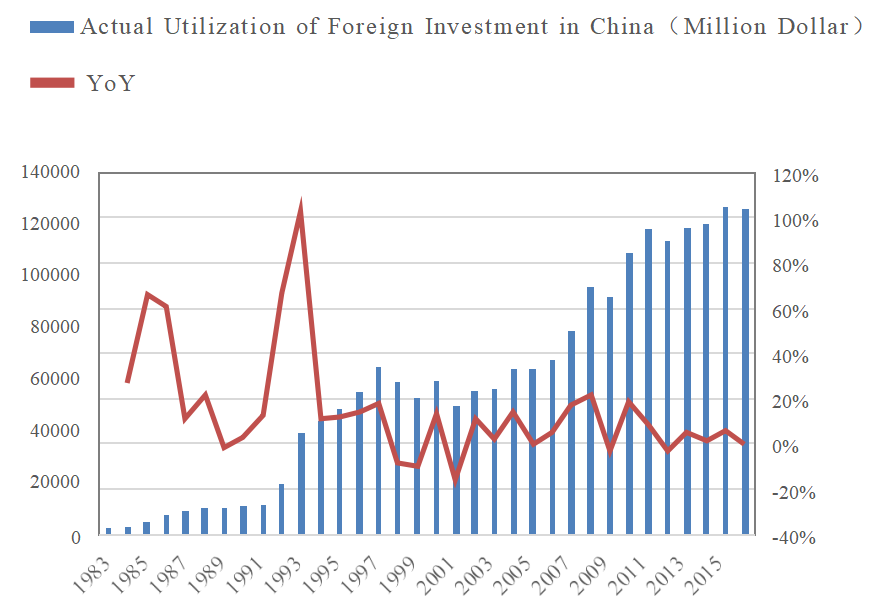
Figure 1: The scale of industrial transfer undertaken by China is increasing

1.2 The development of fine chemical industry, China's advantages are still outstanding

Unlike bulk chemical products, the driving force for the transfer of the fine chemical industry is above cost, and there are also high requirements for technical strength and the degree of industry chain support. The fine chemical production process has long processes, many unit reactions, complex raw materials, strict intermediate process control requirements, and requires highly specialized knowledge and equipment for production. In particular, fine chemical products with high added value require higher technical content. At the same time, because fine chemical products are generally in the middle and lower reaches of the industrial chain, they have high requirements for the completeness of the industrial chain.

China's overall competitive advantage still exists in taking over the industrial transfer: in the past, most of China's industrial development was based on the advantage of labor cost, at the expense of the environment and brutal development. However, today, China's overall external environment has put forward new requirements for industrial development, and under the high pressure of environmental protection to improve labor productivity, China's labor costs still have a relative advantage. At the same time, after years of development, China's industrial chain is complete, and its advantages in terms of supporting facilities and transportation are still obvious, so it can be said that China's competitiveness in taking over industrial transfer still exists.

China's current comprehensive production technology level still has obvious advantages over India. According to the economic theory, labor productivity is the result of multiple factors in production. Although China still has a large gap with developed countries, China's comprehensive production level still has a clear advantage over India, the main competitor in industrial transfer. According to the conference board's Global Economic Data Base, China's overall production level in 2000 was still significantly higher than that of India, a major industrial shift competitor. According to the conference board Global Economic Data Base, labor productivity in China was $3.19/hour per person in 2000, compared to $3.34/hour in India in the same year. China's labor productivity was $3.19/hour in 2000, compared to $3.34/hour in India in the same year, and is currently $13.98/hour, which is lower than the U.S. rate of $71.69. China's current labor productivity of $13.98/hour is lower than the U.S. rate of $71.69, but significantly higher than India's rate of $8.79/hour. China has a significant advantage over India in terms of its current overall production technology level.

Figure 2: Labor productivity depends on various economic and technical factors in production
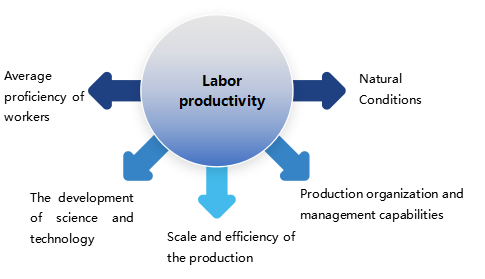
ure 2: Labor productivity depends on various economic and technical factors in production

Figure 3: China has an advantage over India in terms of productivity per unit time of labor
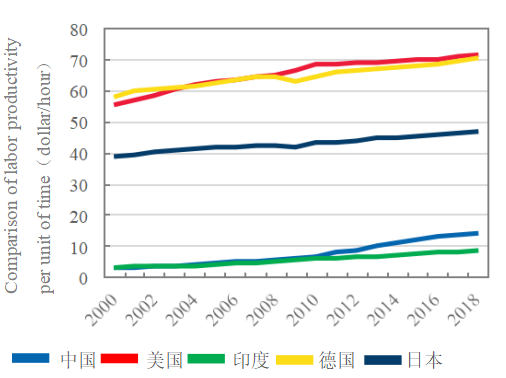
Figure 3: China has an advantage over India in terms of productivity per unit time of labor

Figure 4: China leads the world in year-on-year growth in productivity per unit of time worked
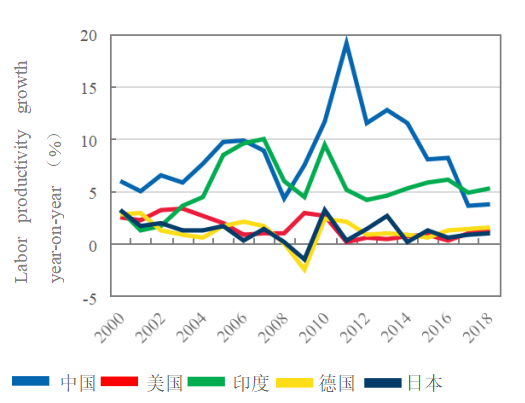
Figure 4: China leads the world in year-on-year growth in productivity per unit of time worked

China's labor cost advantage over India still exists. Although China's labor costs (represented by average wages) have been higher than India's overall in recent years, China's unit labor cost advantage is still increasing when translated into real costs. Assuming a unit labor cost figure of 100 for both countries in 1990, the relative unit labor cost in China is 301 compared to 342 in India by 2017. That is, from 1990 to the present, especially after 2010, China's unit labor cost advantage over India has increased instead.

In terms of the ratio of labor costs to operating income of fine chemical enterprises, China's cost advantage still exists. According to the statistical results, although the ratio of Chinese fine chemical enterprises increased from 2% in 2011 to 5% in 2016, the overall ratio is still lower than that of India and European countries, and China's labor costs still have a relative advantage.

Figure 5: China has an advantage over India in terms of unit labor costs

Figure 5: China has an advantage over India in terms of unit labor costs

C

Figure 5: China has an advantage over India in terms of unit labor costs

China's chemical production is growing at a fast pace, and it is difficult to surpass the advantages of industrial chain support. Since the reform and opening up, driven by China's demand, China's chemical industry has been developing by leaps and bounds as it has taken over part of the industrial transfer while continuously improving its own technological strength. Since the development of the chemical industry, China has a complete chemical industry chain, and the output of oil refining, polyester (PTA), titanium dioxide, organosilicon, dyestuff and other products are in the first place in the world. As of 2016, China's chemical product sales reached 133.1 billion euros, accounting for about 40% of the total, reaching the first place in the world, far ahead of the United States and Germany, which are in the second and third places. In the environment of clear international industrial division of labor, China's complete industrial chain layout and supporting facilities will be China's unique development advantage, which is difficult to surpass.

Figure 7: In terms of sales, China is already the world's number one chemical producer
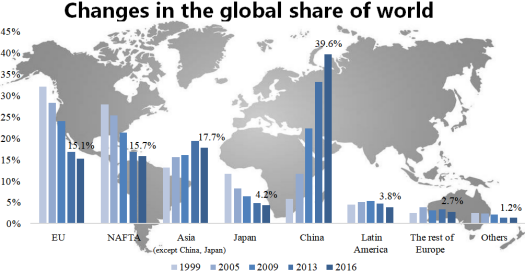
Figure 7: In terms of sales, China is already the world's number one chemical producer

2. China's intermediates industry continues to develop, a new stage of new opportunities

2.1 Intermediates as an important field of fine chemicals, the industry continues to develop

Intermediates are a very important type of fine chemical products, in essence, a class of "semi-finished products", and the downstream industries involved are mainly concentrated in pharmaceuticals, pesticides, dyestuffs and so on. According to statistics, in 2014, the global fine chemical market, pharmaceuticals and their intermediates, pesticides and their intermediates are the top two sub-sectors of the fine chemical industry, accounting for 69% and 10% respectively.

Figure 8: Pesticides, pharmaceuticals and their intermediates are an important part of the global fine chemical industry

Figure 8: Pesticides, pharmaceuticals and their intermediates are an important part of the global fine chemical industry

Intermediates include general-purpose and customized products, and various business models of CRO and CM O/CDMO coexist. Relatively speaking, the customized products of intermediates have higher gross profit margin because of the higher process and standard required. The cooperation will be relatively stable and the sales cost is less once the long-term cooperation relationship is reached with customers. According to the different stages of outsourcing services, the customization business model of intermediates can be generally divided into CRO (contract research and development outsourcing) and CMO (contract manufacturing outsourcing).

For the reason of cost control and efficiency improvement, the simple production outsourcing service can no longer meet the needs of enterprises, so CDMO mode (production R&D outsourcing) has emerged, CDMO requires custom manufacturing enterprises to participate in the customer's R&D process, provide process improvement or optimization for customers, realize high-quality scale production, reduce production cost, and have higher profit margin compared with CMO mode. CDMO mode has benefited from the general trend of industrial transfer in recent years, and the industry has entered into a period of rapid development.

Outsourcing the production of intermediates is a major trend and an important form of industrial transfer. In recent years, as the R&D cost of new drugs rises, the number of new patented drugs decreases and the competition for generic drugs becomes increasingly fierce, the redistribution of labor and outsourcing of production in the industry chain has become a major trend. In order to reduce production costs, improve production efficiency, and reduce the risk of profitability, the manufacturers of pesticides, pharmaceuticals, and dyestuffs have been able to outsource one or more steps of their R&D and production. In order to reduce production costs, improve production efficiency, and reduce the risk of profitability, the trend is for pesticide, pharmaceutical, and dye manufacturers to contract one or more steps of their R&D and production processes to manufacturers with cost and technical advantages. If outsourcing is used, the development and production cycle can be shortened by 25% and production costs can be reduced by 30-50%, while improving efficiency and quality and reducing risks. China has become the first choice to undertake outsourced production in developed countries by virtue of its well-developed industrial chain and more mature and advanced production technology compared to other developing countries.

2.2 Pesticide, pharmaceutical and dye intermediates industry get good development foundation

With the overlapping of industrial transfer and China's demand, agricultural intermediates have gained sufficient space for development.

·The first stage: 1990s to early 21st century

At the beginning of the 21st century, China's pesticide industry system took shape, and the pesticide intermediates produced in China could basically meet the needs of pesticide industry, but some high-end intermediates still need to be imported, and the annual import amount of pesticide intermediates is about 100 million US dollars.

·The second stage: 2006 to 2014

With lower production cost, more complete industrial support and more advanced technology, China's pesticide intermediates industry has undertaken the industrial transfer of pesticide intermediates industry from developed countries, which has rapidly boosted the growth of China's pesticide intermediates and raw drug industry.

·The third stage: from 2015 to the present

Since 2014, due to the weakening demand of global pesticide industry, overseas pesticide giants entered the stage of de-stocking. China's pesticide intermediates production and output value growth rate declined significantly. In addition, after 2015, the high pressure of environmental protection forced a large number of non-standard small and medium-sized enterprises to stop production, and the industry said goodbye to the rapid development of the rough and loose stage. In the future, the intermediate industry will show the process of high-quality development and prosperity of leading enterprises.

In 2011, China produced 3 million tons of pesticide intermediates, and in 2014, it reached 4.7 million tons, with a compound growth rate of 16%. 2015 onwards, China's pesticide intermediates industry grew at a lower rate due to the downturn of the downstream pesticide industry and inventory removal by overseas leaders, and the growth rate dropped to 4.04% and 0.41% in 2015 and 2016 respectively. In 2017, the overseas pesticide giants ushered in the inventory replenishment cycle, boosting the demand for intermediates, and the growth rate picked up.

Figure 9: China's growing production of pesticide intermediates

Figure 9: China's growing production of pesticide intermediates

CRO, CMO/CDMO multiple models drive the rapid development of pharmaceutical intermediates. China's pharmaceutical intermediates industry started to develop highly in 2000, developed countries pharmaceutical companies are more and more focus on strengthening their core competitiveness, namely product development and market development, and accelerating the synthesis of intermediates and API to lower cost developing countries, such as China, India, etc. Meanwhile, the export restrictions are also greatly weakened. China's pharmaceutical intermediates industry has been given excellent development opportunities. At present, China's pharmaceutical intermediates industry is one of the largest branches of the fine chemical industry.

The global pharmaceutical intermediate industry is developing at a high speed and the industry continues to shift to China. The cost of leading companies is rising and the proportion of outsourcing is still increasing. The global pharmaceutical outsourcing market maintains a high growth rate of over 10%, and in search of more efficient and low-cost production methods, pharmaceutical companies continue to increase CMO /CDMO outsourcing business in the future. According to the forecast of Southern Institute, the global CMO/CDMO market size is expected to exceed USD102.5 billion in 2021, with a CAGR of about 12.73% from 2017 to 2021. On top of that, China's industry intermediates development growth rate is 5%-10% higher than the global development growth rate, so it can be said that the pharmaceutical intermediates industry is continuing to shift to China, and there is huge space for the development of pharmaceutical intermediates in China.

China has become the largest producer of dyestuff intermediates and the industry has entered a mature stage. Since the 1970s, China's dyestuff intermediates industry began to take off, and in the 1980s, the rapid development of China's textile industry and the gradual shift of global dyestuff production to Asia significantly boosted the rapid development of China's dyestuff intermediates industry, and by the 1990s, China had become the world's largest producer of dyestuff intermediates. In recent years, China's dyestuff industry has made great progress, and the production volume of dyestuff has ranked first in the world for many years. The rapid development of dyestuff industry depends on the rapid growth of dyestuff intermediates, especially the export demand and market competition have promoted the progress of production technology and quality as well as the development of varieties and output of intermediates manufacturers.

Environmental protection requirements have increased the industry influence of large enterprises and profitability levels have recovered. Unlike pesticide and pharmaceutical intermediates, dye intermediates basically only have generic products, typical products such as H acid, para-ester, reductant, etc. In the past, dyestuff intermediates had a single product and fierce competition, and the phenomenon of price reduction and competition for sales was serious. Nowadays, under the high pressure of environmental protection, the capacity of small and medium-sized enterprises is affected, and the influence of large enterprises

The force of the increase, profitability level has recovered.

2.3 environmental protection requirements to enhance, the leading enterprises in the fine chemical industry will focus on benefiting

China's environmental requirements are tightening, high value-added industries to get more layout resources. China's current environmental protection trend can be summarized as three points: 1. environmental protection routine, strict, the future of environmental protection tend to tighten the general trend will not change, the development of green chemical road is firm; 2. enterprises into the park, standardized, the cost has increased significantly; 3. land is difficult, new project approval is difficult, the traditional project put into production no way. We believe that in the face of the ever-increasing

We believe that in the face of the increasing pressure of environmental protection policies, the way out for enterprises is to improve the added value of products and industrial integration. In other words, with increased costs and insufficient space to plan new plants, the source of future profit growth will either be R&D-driven to enhance the added value of products or through mergers and acquisitions to build an industrial platform.

Leading chemical companies will gain more competitive advantage as environmental costs rise. According to the American Chemistry Council, EH&S costs (environmental protection and employee health and safety costs) for the U.S. basic and fine chemical industries are about $14.3 billion, and for a typical company, EH&S accounts for about 5% of operating revenue. As China's environmental requirements increase, Chinese chemical companies will also face higher environmental costs in the future. Under the high pressure of environmental protection, it is difficult for small companies to bear high environmental expenses, and often only large companies have enough capital and technical power to complete environmental protection standards, and leading companies will gain a higher competitive advantage.

2.4 Technology requirements continue to improve, efficient R & D enterprises will stand out

R&D is of great significance to the intermediate industry. At present, China's intermediates industry can meet the needs of most industries of downstream pesticides, pharmaceuticals and dyestuffs, but still a small part of the demand depends on imports, intermediates enterprises will focus on developing intermediates that China can not yet produce in the future. And the overseas intermediates enterprises pay high attention to technology research and development and get good returns. Increase investment in R&D and strengthen independent innovation have more independent innovation intermediates, including compound, process route and process condition innovation, can get independent intellectual property rights and more right to speak, at the same time, enterprise gross margin has more room for improvement.

3. Intermediates industry has huge space and multiple development opportunities

Pesticide and pharmaceutical intermediates are still in the growth period, and the industry itself has strong growth space. Among them, custom intermediates with strong profitability will face a large number of patent expiration in the next few years, generic drugs will get a significant increase in space, intermediates manufacturers will still enjoy the explosive growth of demand in the short term, and the long-term extension to the downstream of the industry chain by virtue of its technical advantages, the profitability of enterprises will further improve. And general-purpose especially dye intermediates, benefit from environmental protection requirements to suppress the capacity of small and medium-sized enterprises, industry supply contraction, the leading enterprises will enjoy the profit growth brought by price improvement.

3.1 Pesticide, pharmaceutical intermediates demand for stable growth, with room for growth

The demand for pesticide intermediates is relatively stable, and the downstream demand is growing slowly. China's patented pesticide custom intermediates are mainly export-oriented, corresponding to the downstream of the global pesticide market. Pesticide is a rigid demand, the tightening of the arable land area, the change of agricultural farming mode, the increase of purchasing power and the improvement of living standard will significantly increase the market demand for agriculture. It is expected that the global pesticide industry will show a slow growth trend in the future, which will drive the steady growth of China's proprietary pesticide custom intermediates industry.

Figure 10: Global Crop Protection Market Size Growth Trend

Figure 10: Global Crop Protection Market Size Growth Trend

Figure 11: Global Pharmaceutical Market Size Growth and Forecast

Figure 11: Global Pharmaceutical Market Size Growth and Forecast

3.2 Under the background of patent cliff, there are opportunities for CDMO mode and industry chain extension

The downstream pesticide and pharmaceutical industries are both facing the "patent cliff", which is a challenge and an opportunity. In the next few years, dozens of important patented pesticides will be transformed into generic drugs. In recent decades, the development costs of patented pesticides have increased rapidly, while a large number of important pesticide patents have expired, internationally known as the "patent cliff". According to "Agrow's New Generics 2018," between 2018 and 2022, a total of According to Agrow's New Generics 2018, 30 pesticides will have expired patents on compounds that will be converted from patented pesticides to generic pesticides between 2018 and 2022.

Figure 12: Global heavyweight pesticide patents expire

Figure 12: Global heavyweight pesticide patents expire

The share of the generic pesticide market has been increasing. The development of generic pesticides, especially the pesticide varieties whose patents are about to expire, has been a hot spot for the development of the pesticide industry. Therefore, the world's pesticide giants have gradually begun to shift their focus to the production of generic pesticides, and their share in the global pesticide market has been increasing year by year. According to China Pesticide Network, there are 28 pesticide compound patents expiring during 2015-2020, among which 13 products have a compound annual growth rate of more than 10.0% during the patent period of 2010-2015, much higher than the average growth rate of 4.4% in the pesticide industry.

As with pesticides, a $194 billion market for patented drugs is expected to face patent expiration between 2017 and 2022, the second patent cliff peak since 2012, according to Evaluate.

Figure 13: Generic drug sales opportunities due to patent expiration

Figure 13: Generic drug sales opportunities due to patent expiration

Intermediates upgrade to CDMO mode and enjoy the profit improvement of product release. As custom intermediates, their downstream commodities are patented pesticides/pharmaceuticals, under the current patent cliff background, the orders of downstream single customers will certainly be greatly affected, however, if custom intermediates can deeply bind the production of products with their years of production experience and technical advantages, the companies will benefit from the rapid growth of downstream demand. The product release opportunity brought by deep binding still has considerable profit space.

Industry chain extension and integrated layout will effectively enhance the competitiveness of enterprises. Because of different positions in the industry chain, sales margins vary greatly and profits are not comparable. The same is true for intermediate enterprises.

3.3 Industry de-capacity effect is remarkable, leading dyestuff intermediates enterprises enjoy the profit space of price rebound

Global demand for dyestuffs continues to grow, and intermediates benefit simultaneously. Although in recent years, China's printing and dyeing industry has continued to be in the doldrums, and the growth rate of dyestuff production has declined significantly, which has failed to effectively support the development of intermediates industry, however, from a global perspective, the demand for dyestuffs will show continuous growth in the future, which forms a certain support for the intermediates industry. According to MRFR, the compound growth rate of 8.13% will be maintained from 2016 to 2023, which will have a long-term impact on the export of intermediates. In the long run, it will have a pulling effect on the export of the dye intermediates industry.

Under the high pressure of environmental protection, the price of dyestuff intermediates rose rapidly, pushing up the profit level of industry leaders. Under the current background of high pressure of environmental protection, a large number of enterprises have shut down production and the industry has a significant effect of de-capacity due to the large environmental pollution produced by dyestuff intermediates in the production process, leading to a rapid rise in product prices. For the leading dyestuff intermediates manufacturer, which attaches importance to environmental protection and has not shut down production, the company's operating income and gross margin profit have increased significantly.

4. Investment recommendations

Under the background of the continuation of industrial transfer trend, continuous growth of downstream industries and tightening of environmental protection in China, the industry will leave the period of rough and rapid development and enter a new stage of leading prosperity. The leading intermediate companies have strong R&D strength and environmental governance capabilities, and through strong R&D technology advantages to CDMO mode development, industrial chain extension, broaden product lines and enhance profitability. Based on the above logic, we recommend the leading fine chemical intermediates with perfect environmental protection system, strong R&D strength and industrial chain extension opportunities.

5. Risk tips

The progress of industrial transfer of overseas intermediate industry is lower than expected. Downstream pesticide, pharmaceutical and dye market boom is lower than expected. China's environmental protection control is lower than expected, and the effectiveness of R&D and industrial chain extension of intermediate enterprises is lower than expected.

Article written by SUNCHEM Editorial Team

Related articles

Why You Should Purchase Chemicals in China through Sunchem

Fluorinated Pharmaceutical Intermediates

magnifier